
Will it fit?
Quick reference: how many cubic feet of freezer space you need by share size, plus tips on stand-up vs. chest freezers.
How much freezer space do you have?
Tell us the cubic feet of empty freezer space, and we'll recommend the largest share that fits comfortably — with a little buffer for the inevitable add-on bundle.
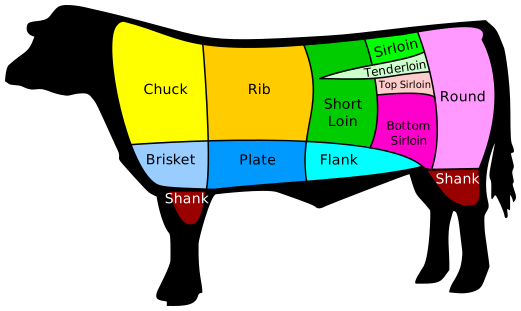
- Steaks — ribeye, strip, sirloin, tenderloin, T-bone
- Roasts — chuck, rump, sirloin tip, brisket
- Ground beef — 80/20, 1-lb packs
- Short ribs & stew — shank, brisket, plate
- Soup bones — marrow + knuckle, free
- Organ meats — liver, heart, oxtail (optional)
Every size gets every cut. Bigger share, more of each.
A half fits comfortably with room left over for ground beef bundles, holiday roasts, or seasonal pork.
Reserve a Half24 cu ft
Dedicated chest or stand-up freezer territory. Plan for one freezer that does nothing but hold this share.
11 cu ft
Comfortable in a 14–16 cu ft chest freezer or a small stand-up freezer.
6 cu ft
Fits in most stand-up freezers if you clear out other items, or a 7 cu ft chest freezer.
3 cu ft
Can squeeze into the freezer compartment of a side-by-side fridge if you reorganize.
1 cu ft per ~25 lbs of cut, packaged beef.
That's a generous estimate — real-world packing is closer to 30 lbs/cu ft for ground in 1-lb logs and 20 lbs/cu ft for irregularly shaped roasts and bone-in cuts. Round up if you're cutting it close.
Chest freezers win on capacity. Stand-ups win on access.
A chest freezer holds more usable space per cubic foot and runs more efficiently. A stand-up makes finding that one ribeye on a Tuesday night much easier. Most beef-share customers eventually buy both, in that order.
Get the freezer before you reserve.
New chest freezers run $300–$600 at any big-box appliance store. Used ones show up on Facebook Marketplace constantly for $100–$200. Plan to have it set up and running for at least 24 hours before pickup day so it's properly cold when you load it.